
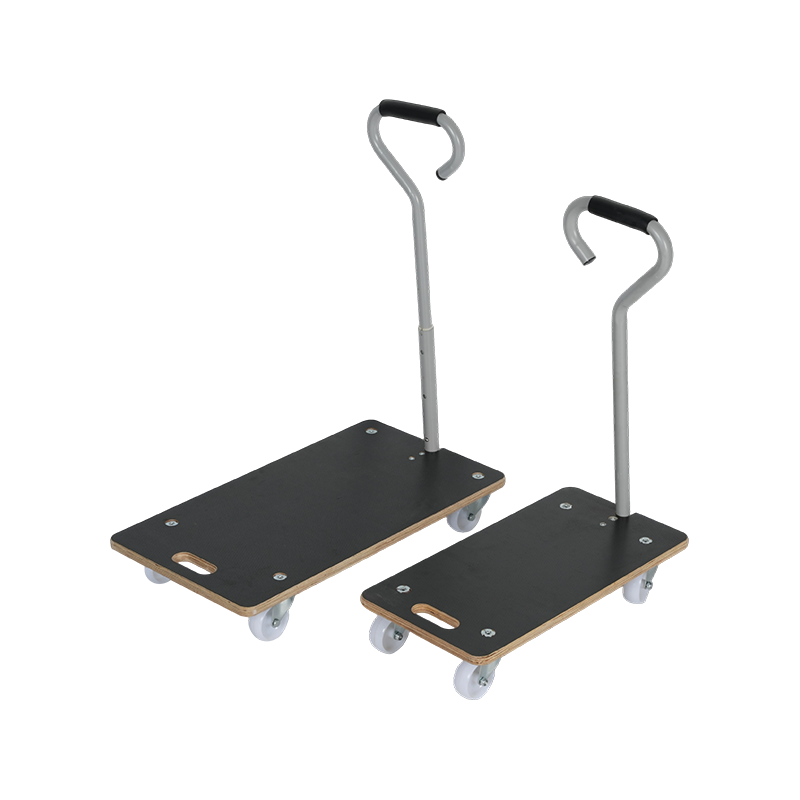
A dolly is a platform on wheels. It slides under a box, a stack of panels, a piece of equipment, and carries it across the floor. A waterproof multi-layer board dolly does this with a deck made from laminated, water-resistant board instead of raw plywood or metal. The deck shrugs off the wet, the spills, and the floor wash. For moving companies, warehouses, and any operation where the floor is wet and the loads are heavy, the waterproof dolly is the cart that keeps working after the others delaminate.
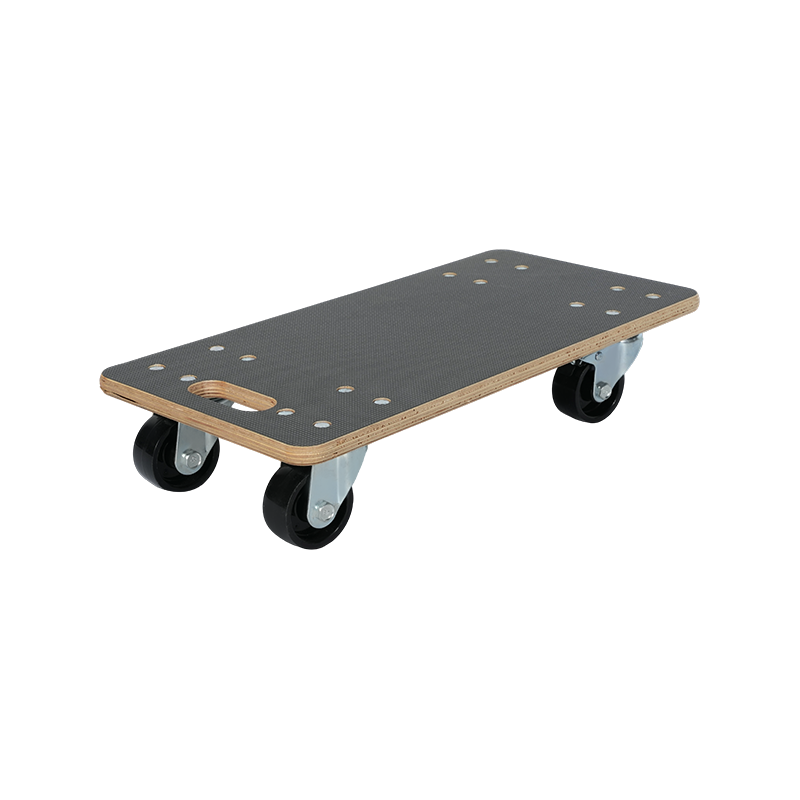
Raw plywood absorbs water. The layers separate. The deck warps and loses its strength. A waterproof multi-layer board dolly uses a resin-bonded plywood, a coated composite, or a plastic-laminated board that does not soak up the moisture. The layers are fused with waterproof adhesive. The surface is sealed.
The deck is the load surface. It has to stay flat. A warped deck makes the load rock and slide. A waterproof multi-layer board dolly with a properly sealed deck stays flat through the wet.
The edge is the weak point on any laminated board. Water gets in at the edge and the layers start to separate. A waterproof multi-layer board dolly with sealed edges, either painted, banded, or wrapped, blocks the water at the entry point.
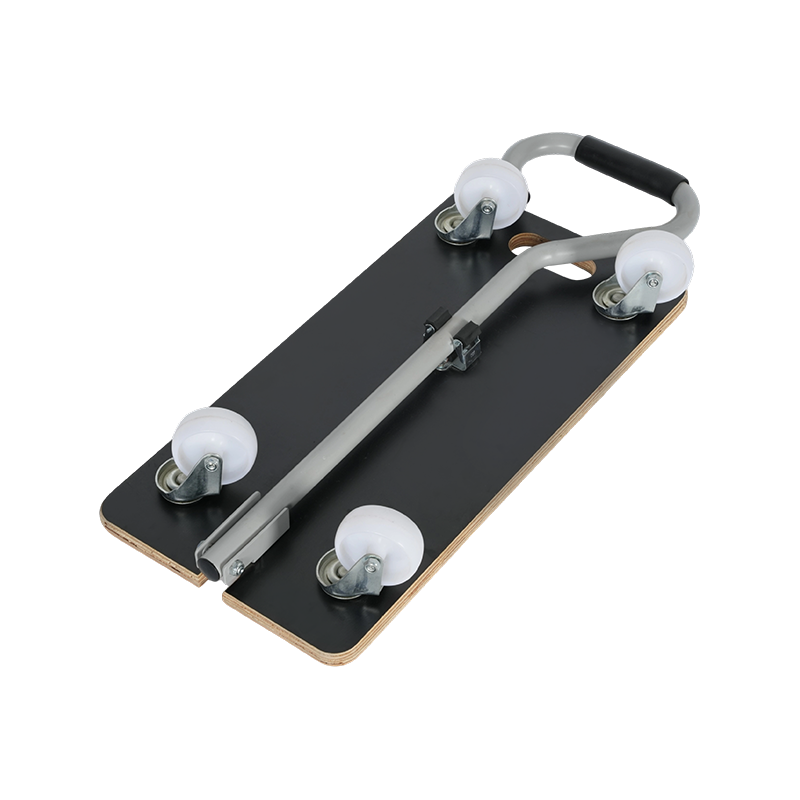
The wheels carry the weight. A dolly for heavy loads uses four or six caster wheels, mounted on the underside. The swivel casters let the dolly turn in place. A waterproof multi-layer board dolly with proper swivel casters moves the load through doorways and around corners.
The wheel material matters for the floor. Polyurethane wheels roll smooth on tile and coated concrete without marking. Rubber wheels grip better but can leave marks. A waterproof multi-layer board dolly with the right wheels for the facility floor protects the floor while moving the load.
The wheel capacity adds up. Each wheel has a rated load. The dolly capacity is the total, usually with a safety margin. A waterproof multi-layer board dolly with enough wheel capacity for the rated load does not collapse a wheel mid-move.
The deck sits on a frame, usually steel or aluminum, that ties the wheels together. The frame carries the load from the deck to the wheels. A waterproof multi-layer board dolly with a properly welded frame holds the rated load without flexing.
The handles are the optional part. Some dollies are flat, designed to slide under the load and roll it. Others have a handle or a rope loop that lets the operator pull the dolly. A waterproof multi-layer board dolly with a retractable or removable handle works both ways.
The bottom clearance matters. The dolly has to clear the door thresholds and the floor obstacles. A waterproof multi-layer board dolly with a low profile slides under a pallet and still rolls over the bumps.
Here is what a waterproof multi-layer board dolly needs to deliver:
Moving companies use dollies on rainy days. The boxes come in off the truck, the floor is wet, the dolly rolls. A waterproof multi-layer board dolly handles the wet without the deck turning soft.
Warehouses use dollies to move goods from the dock to the rack. The floor gets washed. The dolly sits in the water. A waterproof multi-layer board dolly in a warehouse survives the washdown.
Facilities with climate swings, cold rooms, outdoor covered areas, use dollies that move between the environments. The condensation, the rain, the temperature changes. A waterproof multi-layer board dolly built for the wet holds together.
The layers separate because the edge was not sealed and the water got in. A waterproof multi-layer board dolly with sealed edges resists. The deck sags because the board was too thin for the load. A properly rated deck holds. The wheels lock up because the bearings were cheap. Quality casters keep rolling.
A waterproof multi-layer board dolly moves the load across the wet floor without falling apart. The deck stays flat. The wheels keep rolling. Choose a dolly with a sealed deck, a solid frame, and casters matched to the floor. The load will move and the dolly will last. That is the job. That is what the dolly is for.

We sincerely welcome domestic and international customers to visit us and discuss cooperation opportunities!

ykjg@wenlide.com
ykxy@wenlide.com

86-0579-89266926
86-0579-87353489

+86-13735620288
+86-15258987461
+86-13566910892

No. 299, Quanhu Indsutrial Zone, Shizhu Town, Yongkang City, Zhejiang Province, China
Copyright © Yongkang XiangYe Tools Manufacturing Co., Ltd. All Rights Reserved.
Hand Trucks and Transport Trolley Manufacturer



 English
 中文简体
中文简体