
The hand-crank hose reel mounting bracket has become an essential accessory for workshops, service vehicles, and industrial facilities requiring organized hose storage and easy deployment. This bracket provides a sturdy attachment point for hose reels, allowing operators to mount the reel securely to walls, floors, or vehicle beds while accommodating the manual cranking motion required for winding and unwinding hoses. Recent field reports indicate that properly installed brackets reduce reel vibration, extend hose life, and improve operator convenience during daily use.
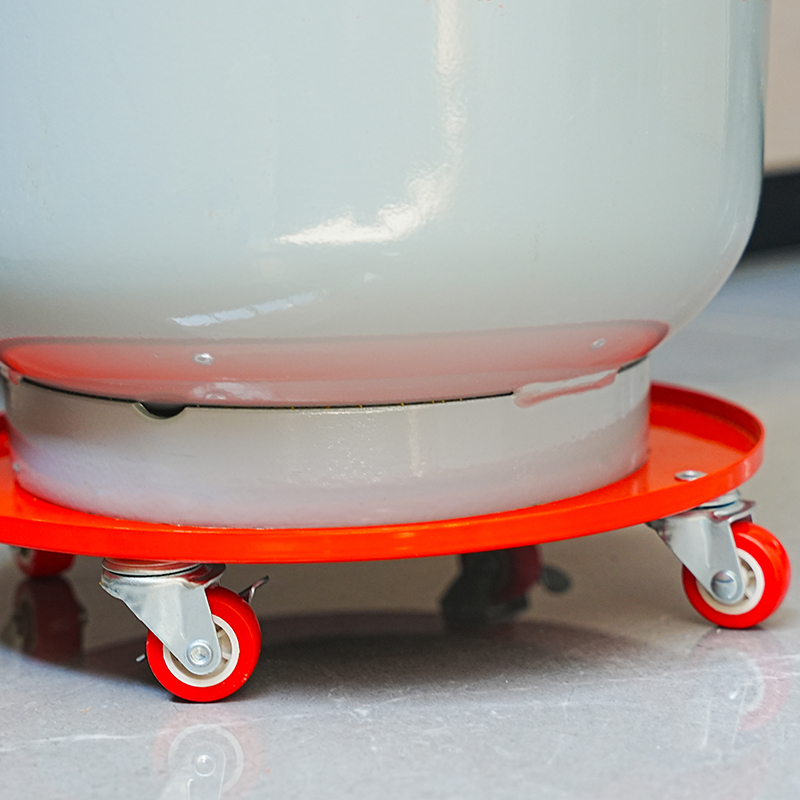
The hand-crank hose reel mounting bracket is typically fabricated from steel plate or heavy-gauge formed sheet metal, with thicknesses ranging from 3 to 6 millimeters depending on the reel weight and hose capacity. Steel brackets receive protective finishes such as powder coating, zinc plating, or epoxy paint to resist corrosion. Stainless steel brackets are available for food processing, marine, or chemical facilities. The bracket design includes a flat mounting plate with pre-drilled holes, extended arms that support the reel shaft, and reinforcing gussets or ribs to prevent flexing under load.
The bracket accommodates multiple mounting orientations to suit different workspace layouts:
Each configuration requires specific hole patterns and fastener types. Wall mounts typically use expansion anchors, floor mounts rely on anchor bolts set into concrete, vehicle mounts use U-bolts or clamps, and slotted holes allow fine adjustments during installation.
The bracket must support both the static weight of the reel and hose and the dynamic forces generated during cranking and hose pulling. Standard brackets accommodate reels weighing 20 to 80 kilograms when fully loaded. Proper hand-crank operation requires sufficient clearance between the bracket arms, reel body, and surrounding structure. Crank handle rotation needs at least 150 millimeters of clearance from the reel side. Offset arms position the reel away from the mounting surface to allow full crank rotation. Handle grips should be accessible at 900 to 1200 millimeters from the floor for average-height operators. Stop pins or detents prevent the crank from spinning freely when released.
The durability of the bracket depends on material thickness and weld integrity:
For outdoor installation, protection strategies include zinc-rich primer and urethane topcoats, hot-dip galvanizing for coastal areas, powder coating with edge coverage, and dielectric isolation when mounting to dissimilar metals. Inspect brackets regularly for rust around bolt holes and weld joints.
Routine maintenance tasks include checking mounting bolts for tightness every three months, inspecting welds for cracks after heavy use, examining the bracket for deformation under reel weight, and lubricating reel shaft bearing surfaces. Any bracket showing cracks or significant corrosion should be replaced immediately. Proper installation requires selecting the correct fasteners for the base material—wedge anchors for concrete, sleeve anchors for masonry, structural bolts for steel, and lag screws for wood framing. Installers should follow torque specifications and ensure the mounting surface is flat and plumb, using shims to correct minor irregularities. Always verify that the supporting structure can handle the combined weight of bracket, reel, and hose.

We sincerely welcome domestic and international customers to visit us and discuss cooperation opportunities!

ykjg@wenlide.com
ykxy@wenlide.com

86-0579-89266926
86-0579-87353489

+86-13735620288
+86-15258987461
+86-13566910892

No. 299, Quanhu Indsutrial Zone, Shizhu Town, Yongkang City, Zhejiang Province, China
Copyright © Yongkang XiangYe Tools Manufacturing Co., Ltd. All Rights Reserved.
Hand Trucks and Transport Trolley Manufacturer



 English
 中文简体
中文简体