
The three-wheel hand truck ladder car has emerged as a practical material handling tool for warehouses, retail stockrooms, and delivery operations requiring both vertical access and horizontal transport in a single unit. This equipment combines a rolling platform with an integrated step ladder, allowing workers to reach elevated shelves while carrying tools or small packages, then convert to a hand truck for moving loads across the facility. Recent user feedback indicates that these hybrid units reduce the need for separate ladders and carts, saving floor space and improving workflow efficiency in busy environments.
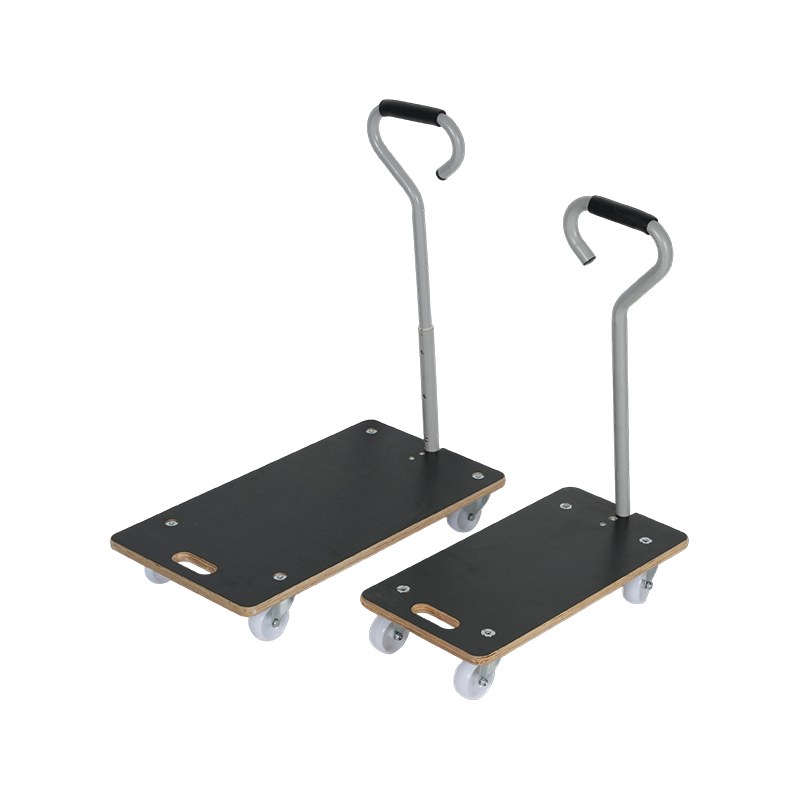
The three-wheel hand truck ladder car features a welded steel or aluminum frame that supports both the load platform and the folding or fixed ladder section. The ladder typically consists of three to five steps, with tread surfaces featuring slip-resistant coatings or treads. The base platform extends outward from the lower frame, providing a stable area for stacking boxes, equipment, or supplies. Key construction details include:
Tubular steel uprights forming the main structural spine with cross-bracing for lateral stability;
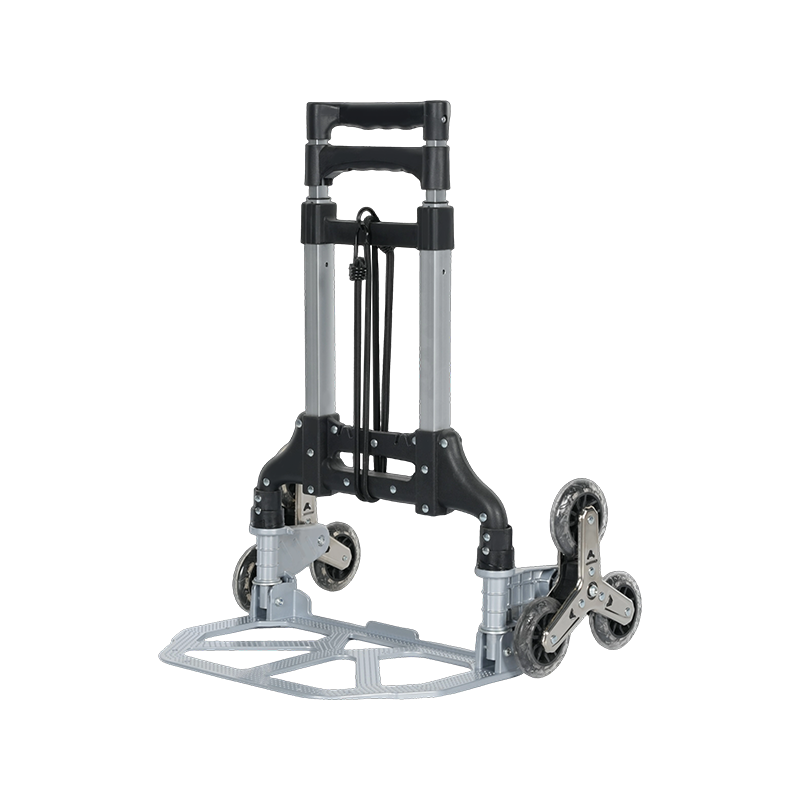
The three-wheel configuration distinguishes this ladder car from conventional four-wheel carts or two-wheel hand trucks. The layout typically positions two fixed rear wheels and one swivel caster at the front, allowing tight turning radiuses in narrow aisles and doorways. Wheel specifications include rear wheels ranging from 150 to 200 millimeters with solid rubber or pneumatic tires, front swivel casters of 75 to 100 millimeters providing steering control, brake mechanisms on the rear wheels or caster for stationary use, and non-marking tire compounds for retail and finished-floor environments. The single front caster creates a tripod effect that ensures all three wheels maintain floor contact on uneven surfaces, reducing wobble during loaded movement.
The integrated ladder section offers convenient access to overhead storage without requiring a separate step stool. Step platforms are sized for secure footing, with the top step serving as a small work surface or tool rest. Design features include deep treads with raised patterns for slip resistance, handrails extending above the top step for secure gripping, and weight capacity markings on each step typically rated for 150 to 200 pounds. The lower platform supports shipping boxes, tools and parts bins, delivered packages awaiting shelving, and small machinery modules within the platform footprint. Platform dimensions vary by model, with capacity ratings spanning 150 to 400 pounds and some models incorporating fold-up side rails for securing loose items during transit.
User safety considerations have driven several design refinements in the three-wheel hand truck ladder car. Key safety and ergonomic features include:
Training guidelines instruct users to push rather than pull the unit, maintain a low center of gravity when moving loads, and engage brakes before stepping onto the ladder. Falls are mitigated by the stability of the three-wheel base, which presents a wider footprint than traditional step stools.
Routine care extends the useful service life of the three-wheel hand truck ladder car. Recommended maintenance procedures include inspecting wheel bearings and swivel mechanisms for smooth rotation and lubricating as needed, tightening all hardware connections after initial setup and periodic use, checking step treads for wear and replacing worn rubber inserts, and cleaning painted surfaces with mild detergents to remove residues. Wheel replacement is the most common repair, with pneumatic tires requiring air pressure checks and solid tires requiring replacement when flat spots appear. Structural welds are inspected for cracks, especially at the junction of the ladder and the base platform. Most units provide several years of service under normal use with proper maintenance.


We sincerely welcome domestic and international customers to visit us and discuss cooperation opportunities!

ykjg@wenlide.com
ykxy@wenlide.com

86-0579-89266926
86-0579-87353489

+86-13735620288
+86-15258987461
+86-13566910892

No. 299, Quanhu Indsutrial Zone, Shizhu Town, Yongkang City, Zhejiang Province, China
Copyright © Yongkang XiangYe Tools Manufacturing Co., Ltd. All Rights Reserved.
Hand Trucks and Transport Trolley Manufacturer



 English
 中文简体
中文简体