


 English
 中文简体
中文简体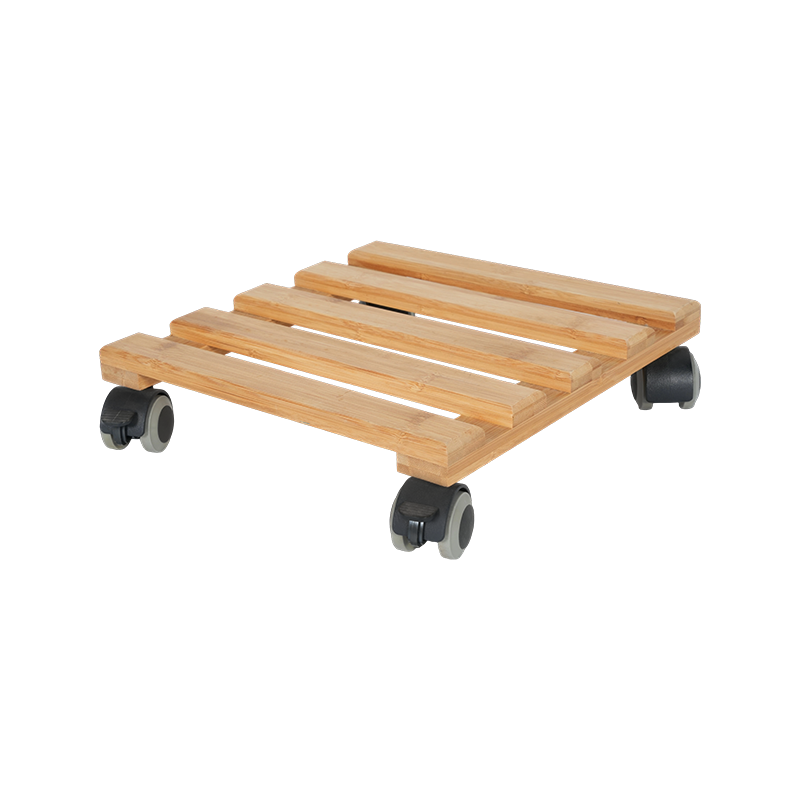
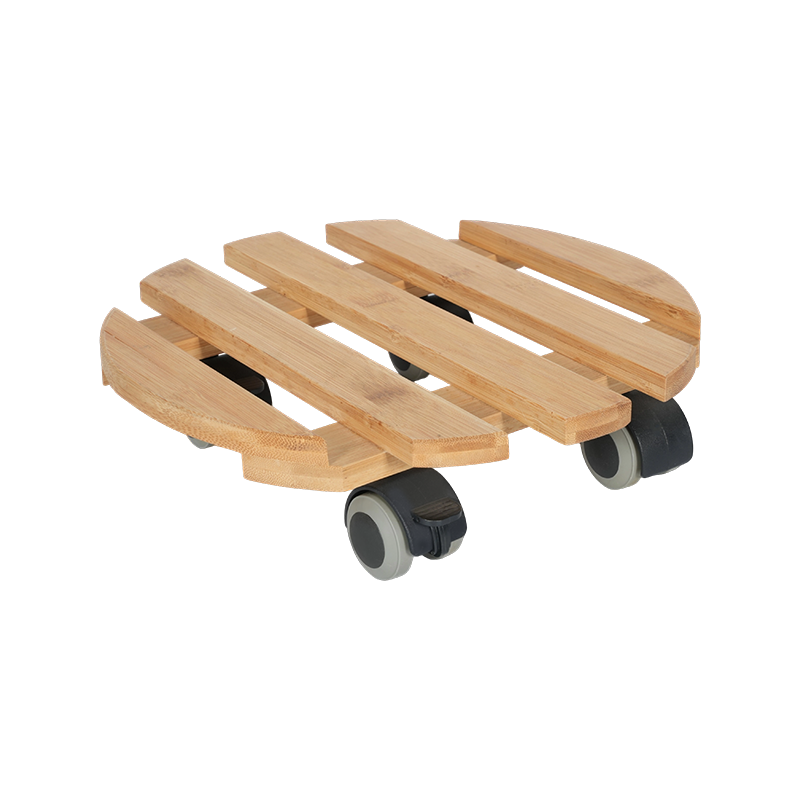

What Are the Material Advantages of a Bamboo Plant Caddy Compared with Other Options?
When comparing bamboo plant caddies with alternatives made from plastic, metal, or solid hardwood, the advantages of bamboo become clear across several practical dimensions.
From a material strength and weight balance perspective, bamboo offers a favorable ratio of load-bearing capability to overall mass. While plastics are lightweight but can deform under sustained loads, and metals provide strength at the cost of increased weight, bamboo achieves structural reliability without excessive bulk. Its fibrous structure allows it to resist bending and cracking when properly processed, making it suitable for supporting potted plants of varying sizes.
From a moisture and environmental adaptability perspective, bamboo performs well in indoor and semi-sheltered environments. Compared with untreated hardwood, bamboo absorbs less moisture and stabilizes more quickly after exposure to humidity. When sealed or laminated, it resists warping more effectively than many softwoods. In contrast, metal caddies may corrode over time, and plastic models can become brittle or discolored with prolonged exposure to light.
From a sustainability and aesthetic perspective, bamboo stands out as a renewable material with a neutral visual character. Its natural grain integrates easily with indoor furnishings and plant arrangements, unlike industrial-looking metals or glossy plastics. At the same time, bamboo’s rapid growth cycle supports more responsible material sourcing compared with slow-growing hardwood species.
How Much Weight Can a Square Bamboo Plant Caddy Generally Bear?
The load-bearing capacity of a square bamboo plant caddy depends on several design and manufacturing variables, rather than a single fixed value. In general, household square bamboo plant caddies are designed to support between 50 and 150 kilograms, covering the majority of indoor potted plant applications.
One key factor influencing weight capacity is platform construction. Solid laminated bamboo panels typically support higher loads than thin single-layer boards. The thickness of the bamboo, along with the orientation of the grain layers, plays a significant role in distributing weight evenly across the surface.
Another important consideration is the caster configuration. Load ratings are often determined by the combined capacity of the wheels rather than the bamboo platform alone. For example, a caddy fitted with four casters rated at 40 kilograms each would theoretically support up to 160 kilograms, provided the frame and mounting points are reinforced accordingly. Casters with metal brackets and ball-bearing assemblies tend to perform more consistently under sustained weight.
The square shape itself also contributes to load stability. Compared with round designs, square caddies offer more uniform edge support, which helps prevent tipping when supporting large planters with flat bases. This makes them suitable for ceramic, concrete, or composite pots commonly used indoors.
In practical terms, manufacturers often recommend staying within 70–80% of the rated capacity to ensure long-term durability. This margin accounts for dynamic forces during movement and helps maintain stable rolling performance over time.
How Is a Bamboo Indoor Plant Caddy Manufactured?
The manufacturing process of a bamboo indoor plant caddy involves several controlled steps to ensure consistency, durability, and functional reliability. It typically begins with raw bamboo selection and processing. Mature bamboo stalks are harvested, split into strips, and treated to remove sugars and moisture that could attract pests or cause deformation. These strips are then dried under controlled conditions.
Next, the dried bamboo strips are laminated and pressed into panels. Adhesives designed for structural bonding are applied, and the layers are pressed together to create a dense, stable board. This lamination process enhances strength and reduces the risk of cracking compared with solid bamboo segments.
Once the panels are formed, they are cut and shaped into the desired caddy dimensions, commonly square or rectangular. Edges may be beveled or rounded to improve safety and appearance. Surface finishing follows, which can include sanding, sealing, and applying water-resistant coatings to improve durability in indoor environments.
The final stage involves hardware installation, particularly the mounting of casters. Wheel brackets are secured using screws or bolts designed to distribute load evenly across the bamboo panel. Quality control checks are conducted to verify load stability, smooth rolling, and surface finish consistency.